Why an Hour of Hill Walking Hits Your Glutes Harder Than Most Gym Sessions
Quick Answer: Walking uphill increases hip flexion at every step, which puts the glutes into a lengthened position under load - the position where they produce the most force and receive the most training stimulus. On flat ground the hip stays relatively extended and the quads and calves dominate. A gradient of around 8 to 15 percent, walked without holding handrails and with a deliberate push through the whole foot, produces substantial glute work that most people never get from their flat cardio.
You can do thirty minutes of hip thrusts and feel less the next day than you do after an hour walking up a decent hill.
That is not a coincidence, and it is not an argument against the gym.

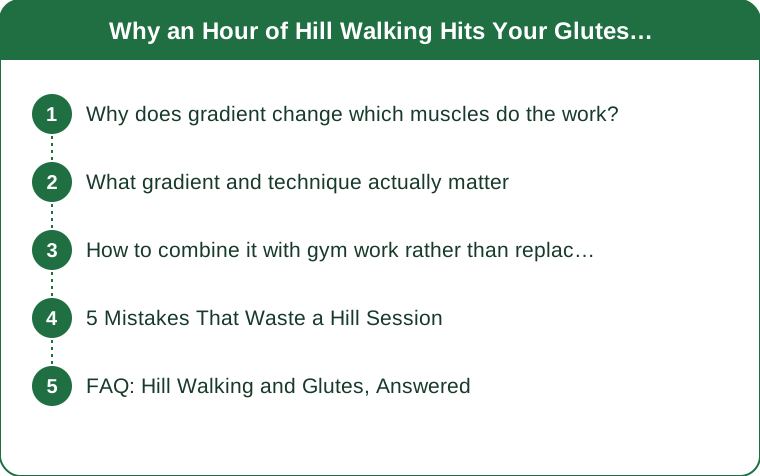
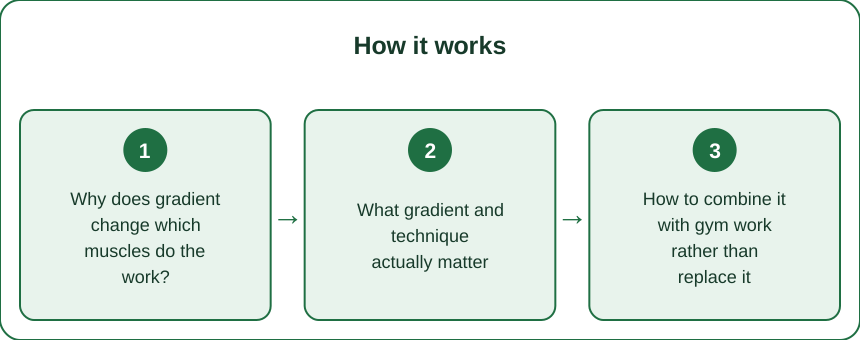
Why does gradient change which muscles do the work?
Uphill walking increases the range of hip flexion at each step, because the leading leg has to reach up as well as forward.
Glutes produce their greatest force from a lengthened, flexed-hip position, which is exactly what a gradient creates and exactly what flat walking does not.
On flat ground the hip stays relatively extended throughout the stride, so the glutes contribute far less and the quads, hamstrings, and calves carry most of the load.
Vertical work is added on top of horizontal work. Every step raises your bodyweight, and hip extension is the primary engine of that lift.
The volume is what makes it significant. An hour of hill walking is somewhere around 5,000 to 7,000 loaded hip extensions, which is a training volume no gym session approaches.
It is also unusually low-impact for the stimulus delivered, which matters if you are managing knees or returning from a break. Uphill is generally kinder to knees than downhill, where the eccentric load is much higher.
What gradient and technique actually matter
Around 8 to 15 percent is the productive range. Below about 5 percent the effect is small; above about 20 percent most people shift into a different pattern with much more forward lean and calf involvement.
Do not hold the handrails on a treadmill. Holding on transfers a substantial share of the load to your arms and largely removes the glute stimulus, which is why incline treadmill walking so often produces nothing.
Take a slightly longer step than feels natural. A short, quick stride keeps the hip angle small; a longer step increases hip flexion and puts the glute into the position that matters.
Push through the whole foot, driving from the heel. Rising onto the toes shifts the work to the calves, which is the most common technique fault on a hill.
Keep the torso relatively upright with a slight hinge from the hips, not a rounded lean from the upper back. Leaning from the chest reduces glute involvement and loads the lower back.
Slow down rather than lowering the gradient. A steeper hill walked slowly produces more glute work than a shallower one walked fast, and speed is the variable to sacrifice.
And carrying load amplifies it further. A weighted pack of even a few kilos increases the hip extension demand meaningfully, and it is the simplest progression available.

How to combine it with gym work rather than replace it
Hill work and loaded gym work train different ends of the same capacity. Hills deliver high volume at moderate load; hip thrusts and squats deliver low volume at high load. Both drive adaptation and neither substitutes for the other.
Use hills on days between heavy lower-body sessions, where they add substantial volume without the recovery cost of another loaded session.
Do not schedule a long hill walk the day before a heavy squat or hip thrust session. It is more fatiguing than it feels, and the following session usually suffers.
Hills are an excellent way to keep training through a deload or a niggle, because the load is bodyweight and the impact is low.
They are also the best available option when travelling or when the gym is not accessible, which covers a large share of missed sessions.
Expect the soreness to be in a different place. Hill walking tends to produce upper glute and hamstring soreness rather than the concentrated glute soreness of a hip thrust, and both are legitimate.
And watch the downhill. Descending is eccentric quad work and is where most of the next-day quad soreness and knee irritation comes from. Shorter steps, slightly bent knees, and taking the descent slowly makes a real difference. This is general information, not medical advice.
5 Mistakes That Waste a Hill Session
Mistake 1: Holding the treadmill handrails. It offloads a large share of your bodyweight to your arms and removes most of the glute stimulus. If you need the rails, the gradient is too steep.
Mistake 2: Going too fast. Speed reduces stride length and hip flexion, which is the opposite of what you want. Slow and steep beats fast and shallow.
Mistake 3: Rising onto the toes. It shifts the work to the calves and is the most common fault on a real hill. Drive through the whole foot with heel contact.
Mistake 4: Leaning forward from the chest. A rounded upper-body lean reduces hip involvement and loads the lower back. Hinge slightly from the hips and keep the chest up.
Mistake 5: Ignoring the descent. Downhill is high eccentric load on the quads and knees, and it is where next-day soreness and irritation usually originate. Take it slowly with shorter steps.
The one that costs the most is the first. Incline treadmill walking with hands on the rails is one of the most common gym activities that delivers close to none of the intended benefit.
FAQ: Hill Walking and Glutes, Answered
Does walking uphill really work your glutes?
Yes, substantially. Gradient increases hip flexion at each step, putting the glutes in a lengthened position under load - the position where they generate the most force. Flat walking keeps the hip relatively extended and the quads dominate.
What incline should I use?
Around 8 to 15 percent is the productive range. Below 5 percent the effect is small; above 20 percent most people shift into a calf-dominant pattern with excessive forward lean.
Why does incline treadmill walking do nothing for me?
Almost always the handrails. Holding on transfers a large share of your bodyweight to your arms and removes most of the glute stimulus. Let go and lower the gradient if you need to.
Can it replace hip thrusts and squats?
No - it complements them. Hills give high volume at moderate load; gym work gives low volume at high load. Use hills between heavy sessions, not the day before one.
Should I walk faster or steeper?
Steeper, walked slowly. Speed shortens the stride and reduces hip flexion, which is exactly the variable doing the work.
TL;DR:
- Gradient increases hip flexion, which puts the glutes in the lengthened, high-force position that flat walking never reaches.
- Aim for 8 to 15 percent, walk slowly with a slightly longer stride, and drive through the whole foot.
- Never hold the treadmill handrails - it removes most of the stimulus and is the reason incline walking often does nothing.
- An hour of hill walking is 5,000 to 7,000 loaded hip extensions, a volume no gym session matches.
- Use it between heavy lower-body days rather than before them, and take the descent slowly to protect the quads and knees.
The hill is not a substitute for the barbell. It is the volume the barbell cannot give you.
See It in Motion
Seen here: Super High Waist Embossed Yoga Leggings with Inner Pocket — shop it on bubblelime.com
Keep Reading
This article is for general informational and styling purposes only. Fit, sizing, and product availability may vary.