Why Your Glute Work Changes When You Take Your Shoes Off
Quick Answer: Footwear changes where your weight sits over your foot, and that changes which hip muscles do the work. A cushioned running shoe raises the heel and softens the base, shifting load forward onto the quads and losing force into the foam. Flat, firm soles or bare feet keep weight through the heel and midfoot, which is where glute-dominant hip extension lives. For hip thrusts, glute bridges, RDLs, and deadlifts, flat and firm is almost always better. For squats, it depends on your ankle mobility.
This is one of the few training variables that costs nothing to test, and most people have never tested it. You can find out in one session.

What is the shoe actually doing?
It is changing your centre of pressure. Every shoe has a heel-to-toe drop, and a raised heel tips your weight forward over the foot. That forward shift moves load from the posterior chain towards the quads, which is precisely the wrong direction for glute training.
A cushioned midsole absorbs force. In a hip thrust or a deadlift, force you put into the floor should come straight back. Soft foam compresses, deforms unevenly, and returns less of it, which is why heavy lifting in running shoes feels vague.
It also destabilises. Foam compresses more under one edge of the foot than the other, so your ankle makes constant small corrections. That is fine when running and it is a problem when you are trying to drive through a fixed base.
And it blocks sensory information. The foot is dense with mechanoreceptors, and a thick, soft sole mutes what they report. Barefoot lifters often describe suddenly being able to feel whether they are pushing through heel or toe - that is not mystical, it is the sole no longer being in the way.
In a hip thrust specifically, foot placement determines the muscle split, and a shoe that makes it hard to feel your foot position makes it hard to get that placement right.
None of this means running shoes are bad. They are excellent at what they are for, which is absorbing repeated impact while running, and that is the opposite job.
Which exercises change most?
Hip thrusts and glute bridges change the most. The whole movement is driving through the heel with the shin roughly vertical at the top. A raised heel changes the shin angle, and soft foam under the heel wastes force. Barefoot or in flat shoes, most people feel the glute contraction at the top immediately more clearly.
Romanian deadlifts change substantially. RDLs need weight through the midfoot and heel with a stable base to load the hamstrings and glutes. A cushioned heel tips the weight forward and people compensate by shifting into the toes, which shortens the hip hinge and turns it into a squat.
Conventional deadlifts change a lot, and there is a second reason. A thick sole raises you off the floor, adding range of motion to a lift where the bottom position is already the hardest part. Flat shoes are the standard for a reason.
Squats are the exception and go the other way for many people. A raised heel lets the knee travel forward, which allows a more upright torso and a deeper squat for anyone with limited ankle dorsiflexion. If you cannot squat below parallel barefoot without your heels lifting, a lifting shoe with a raised heel is genuinely helpful.
Single-leg work benefits enormously from a firm base, because balance is the limiting factor and foam makes it worse. Split squats, step-ups, and single-leg RDLs are all noticeably steadier barefoot or in flat shoes.
Machine work changes least, since the machine provides the stability. Even here, a firm base on a leg press platform transmits force better than a soft one.
So what should you actually wear?
For hip thrusts, bridges, RDLs, and deadlifts: flat, firm, thin. Barefoot, socks with grip, minimal shoes, or classic flat canvas trainers. All work; the priority is a hard sole and minimal drop.
For squats: it depends on your ankles. Test it. Squat barefoot and film from the side. If your heels lift or your torso folds forward hard, a raised-heel lifting shoe will improve your position immediately. If you squat comfortably to depth barefoot, stay barefoot.
For a mixed session: flat shoes are the better compromise than running shoes, because they cost you a little on squats if you have stiff ankles and gain you a lot on everything else.
Check the gym rules before planning to train barefoot. Many gyms require footwear on hygiene and safety grounds, and this is entirely reasonable - a dropped plate on a bare foot is a serious injury. Grip socks or flat shoes solve the problem.
Do not train barefoot around loaded barbells if you are new to lifting. The margin for error is smaller than people think, and the benefit is not worth the risk while you are still learning to control the bar.
And do not buy anything to test this. Take your shoes off for one session of hip thrusts, keep the weight the same, and see whether the top of the movement feels different. That answers the question for you better than any article can.
Myth vs Fact: Shoes and Glute Training
Myth: barefoot training strengthens your glutes directly. Fact: it does not strengthen anything by itself. It changes load distribution and improves your ability to feel and control position, and the strength comes from the training you then do better.
Myth: you need weightlifting shoes to squat properly. Fact: they help people with limited ankle mobility and are neutral or unhelpful for those without it. They are a tool for a specific problem, not a requirement.
Myth: soft cushioned shoes protect your joints when lifting. Fact: cushioning is designed for repeated impact. In a slow, heavy lift there is no impact to absorb, and the instability the foam introduces is a bigger risk than the impact it prevents.
Myth: a raised heel always shifts load to the quads. Fact: in a hip hinge, yes. In a squat, a raised heel lets many people reach greater depth, which increases total glute work through range - the direction of the effect depends on the movement.
Myth: if you feel your glutes more, they are working more. Fact: perceived activation and measured activation do not always match. It is a useful signal, not proof, and the reliable measure is still whether the lift is progressing over weeks.
Myth: you should transition to barefoot everything, gradually. Fact: barefoot lifting on a gym floor is not the same as barefoot walking or running, and it needs no adaptation period. Barefoot running does. Do not conflate them.
How do you test it properly on yourself?
Change one variable and keep the rest identical. Same exercise, same weight, same rep range, same time of day, same order in the session.
Do the test in the second or third week of a block, not the first. In week one you are still learning the movement and everything feels different anyway.
Run it across two sessions, not two sets. Do session A entirely shod and session B entirely barefoot, a week apart. Comparing set 1 shod with set 4 barefoot compares fatigue, not footwear.
Record two things: the weight moved and where you felt it. The subjective note matters here because the effect is mostly about load distribution.
Film your set from the side, once each way. Look at the shin angle at the top of the hip thrust and at whether your weight drifts forward through the set. That is more informative than how it felt.
Give it three or four weeks before deciding. A change in footwear alters your bracing and setup slightly, and the first session in a new setup is usually the worst one.
And note that autumn is when this quietly matters more. As training moves indoors and back to a gym floor, people revert to whatever shoes they walked in wearing, which after a summer of outdoor sessions is often a cushioned running shoe. If your glute work has felt vague since the sessions moved inside, the footwear change may be the whole explanation.
FAQ: Footwear and Glute Training, Answered
Is barefoot better for hip thrusts?
For most people, yes - a firm, flat base with weight through the heel produces a clearer, stronger hip extension. If your gym does not allow bare feet, grip socks or flat shoes give you nearly all of the benefit.
Should I buy lifting shoes?
Only if you squat and have limited ankle mobility that a raised heel demonstrably fixes. Test it first by squatting with your heels on small plates - if that transforms your position, lifting shoes will help.
Can I just use flat canvas trainers?
Yes. They are flat, firm, and cheap, and they have been the default for lifters for decades. They are a completely reasonable answer to this entire question.
Does this apply to machines and cable work?
Less, because the machine provides stability. It still applies to anything where you drive through the floor, including leg press and standing cable work.
This is general information, not medical advice. If you have foot, ankle, or knee problems, or you are prescribed orthotics, talk to a professional before changing your training footwear.
TL;DR:
- Shoes change your centre of pressure, and a raised, cushioned heel shifts load off the glutes and wastes force into foam.
- Hip thrusts, bridges, RDLs, and deadlifts all improve on a flat, firm base - barefoot, grip socks, or flat trainers.
- Squats are the exception: a raised heel helps if limited ankle mobility stops you reaching depth, and does nothing if it does not.
- Test it properly - two whole sessions a week apart, same weight, filmed from the side, not two sets back to back.
- Never train barefoot around loaded barbells if you are new to lifting; grip socks solve the hygiene and safety problem.
If your glute work has felt vague since your sessions moved back indoors, look at what is on your feet before you change the programme.
See It in Motion
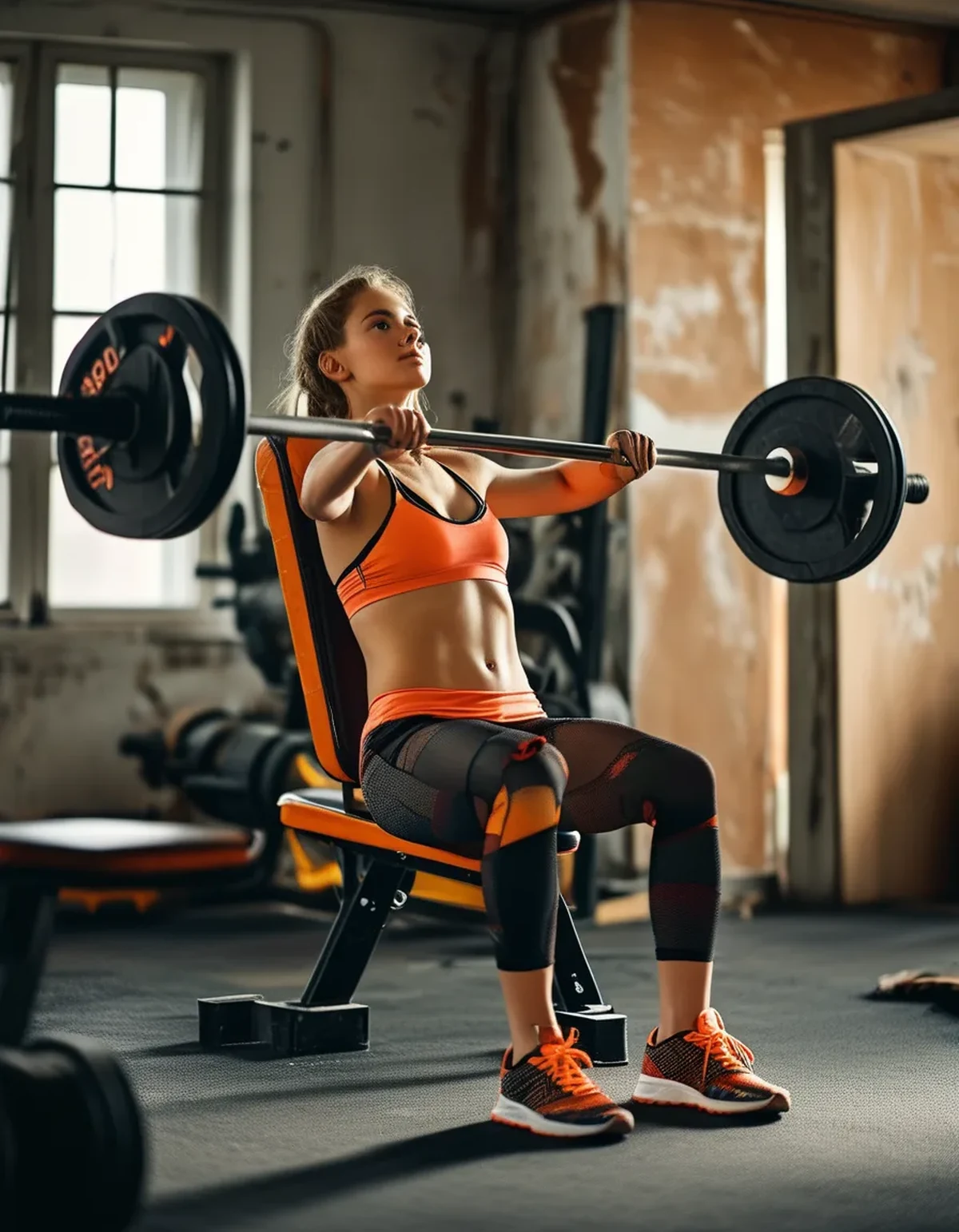
Seen here: Super High Waist Embossed Yoga Leggings with Inner Pocket — shop it on bubblelime.com
Keep Reading
This article is for general informational and styling purposes only. Fit, sizing, and product availability may vary.