How Often Should You Actually Train Glutes Per Week for Visible Growth?
Quick Answer: Current strength training research generally supports training glutes with direct, challenging exercises 2-3 times per week as the frequency most consistently associated with visible growth, since this allows enough total weekly training volume while still providing adequate recovery time between sessions — training glutes with heavy, challenging work every single day tends to accumulate fatigue faster than recovery can keep pace with, which can actually blunt growth rather than accelerate it.
More frequent isn’t automatically better once you account for how muscle recovery and growth actually work.

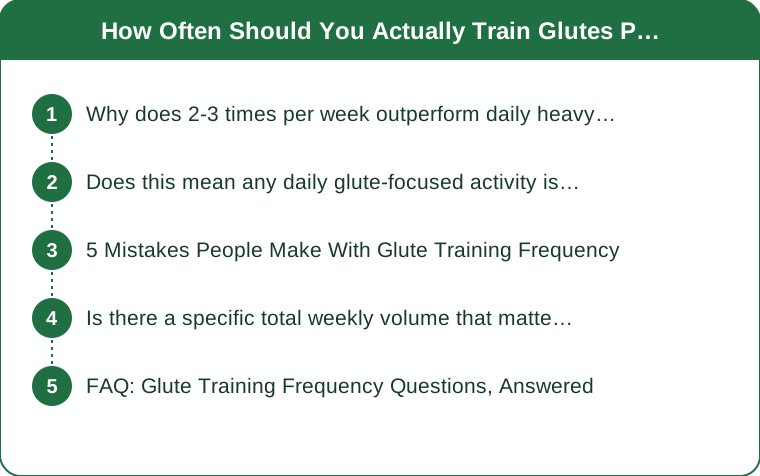
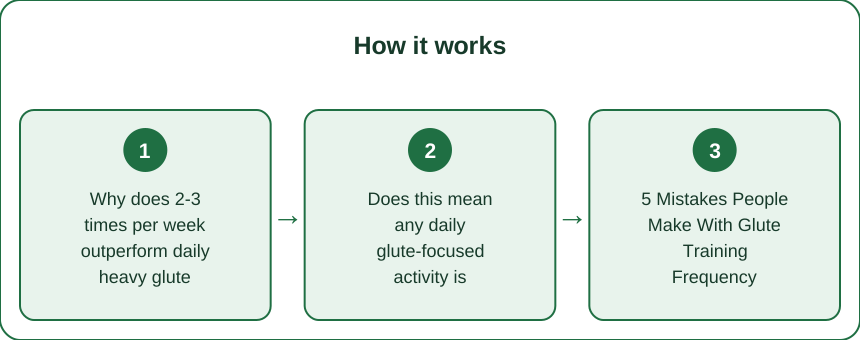
Why does 2-3 times per week outperform daily heavy glute training for actual growth?
Muscle growth occurs during the recovery period after training, not during the workout itself, and glutes — like any muscle group — need adequate time between challenging sessions to complete this recovery and adaptation process before being effectively trained again.
Training with genuinely challenging, heavy resistance every single day doesn’t allow this recovery window to complete, meaning later sessions in a daily routine are often working an already-fatigued, incompletely-recovered muscle, which research suggests produces less growth stimulus than working a properly recovered muscle at a slightly lower frequency.
Does this mean any daily glute-focused activity is actually counterproductive?
Not necessarily — the recovery concern specifically applies to genuinely challenging, high-effort resistance training, and lighter daily activation work (glute bridges, banded walks, or general daily movement) doesn’t create the same recovery demand and can be done more frequently without interfering with the harder 2-3x weekly sessions.
This is why many effective glute training programs combine 2-3 heavier, challenging sessions per week with lighter daily activation or mobility work, rather than treating ‘glute training’ as a single uniform intensity that needs the same recovery consideration regardless of how hard a specific session actually is.

5 Mistakes People Make With Glute Training Frequency
Mistake 1: Training glutes with heavy, challenging loads every single day, not allowing adequate recovery.
Mistake 2: Assuming more frequency always means faster results, without considering total weekly volume and recovery.
Mistake 3: Not distinguishing between heavy training sessions and lighter activation work when planning frequency.
Mistake 4: Neglecting adequate protein intake and sleep, which are just as important as training frequency for actual recovery and growth.
Mistake 5: Training the same specific movement pattern every session rather than varying exercises across the week for more complete muscle development.
Is there a specific total weekly volume that matters more than frequency itself?
Yes — research generally suggests total weekly training volume (sets and reps performed with adequate intensity) is the primary driver of growth, with frequency mattering mainly as the vehicle for accumulating that volume without excessive single-session fatigue.
This means 2-3 sessions per week with sufficient volume in each generally outperforms both a single very high-volume weekly session (harder to recover from and often lower quality by the end) and daily very low-volume sessions (not enough total stimulus), making the 2-3x frequency range specifically a practical sweet spot for balancing volume and recovery.
FAQ: Glute Training Frequency Questions, Answered
Does training frequency need to change for someone newer to strength training versus more experienced?
Beginners can often see good progress with slightly lower frequency and volume, while more experienced lifters may benefit from pushing toward the higher end of the 2-3x range or slightly beyond, since their muscles have adapted to prior training stress.
Is soreness the best indicator of whether recovery has been adequate before the next session?
Not entirely reliable on its own — soreness can occur without indicating incomplete recovery and can be absent even when recovery isn’t complete, so tracking performance (whether you can match or exceed previous session’s weights/reps) is a more reliable recovery indicator.
Can glutes be trained effectively with bodyweight exercises alone at this frequency?
Yes, particularly for beginners, though progressive resistance (added weight or increasing difficulty over time) becomes increasingly important for continued growth as bodyweight exercises alone become less challenging.
TL;DR:
- 2-3 challenging glute sessions per week is generally the research-supported sweet spot for visible growth
- Daily heavy training often outpaces recovery capacity, which can blunt rather than accelerate growth
- Lighter daily activation work is fine alongside 2-3 heavier weekly sessions without the same recovery concern
- Total weekly training volume, not frequency alone, is the primary driver of growth
More isn’t automatically better — matching frequency to actual recovery capacity is what drives consistent progress.
See It in Motion
Seen here: High Waist Yoga Leggings with Side Pockets — shop it on bubblelime.com
Keep Reading
This article is for general informational and styling purposes only. Fit, sizing, and product availability may vary.