How Long to Rest Between Glute Sets - and Why It Changes the Result
Quick Answer: Rest length changes what a set actually trains. For heavy compound glute work - hip thrusts, squats, deadlifts - rest 2-3 minutes, because anything shorter means the next set is limited by fatigue rather than by the muscle. For accessory and isolation work - abductions, kickbacks, banded work - 45-90 seconds is right and the shorter rest is part of the stimulus. The most common error is the reverse: rushing heavy sets and dawdling through easy ones. Time your rest. Guessed rest drifts, and it drifts in the direction that makes your session longer and weaker.
If your glute progress has stalled while everything else in your programme stayed the same, this is one of the first places to look.

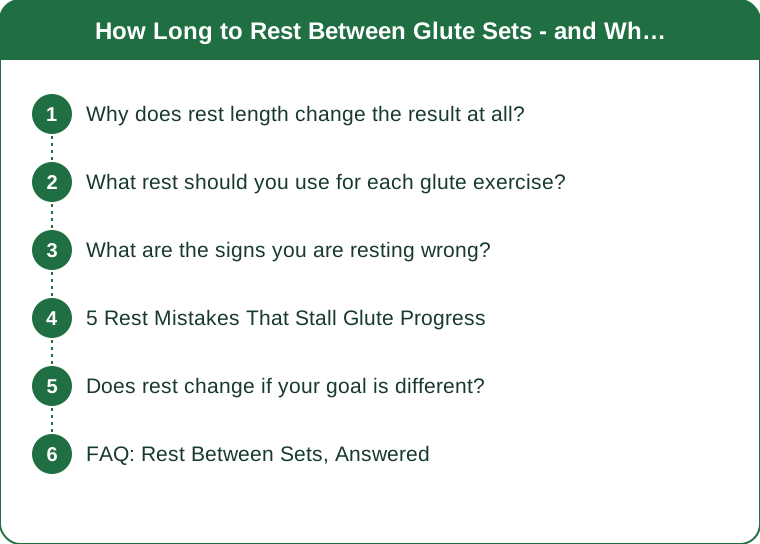
Why does rest length change the result at all?
Because the energy system you are drawing on recovers on a specific timeline, and you either wait for it or you do not.
Heavy sets run on phosphocreatine, which is your immediate-power fuel. It refills roughly 50% in 30 seconds, 85% in two minutes, and near-fully in three to five minutes. Come back at 60 seconds after a heavy set of hip thrusts and you are starting the next set at a substantial deficit.
The consequence: your second and third sets fall off. If you hit 8 reps then 6 then 4 across three sets, you are almost certainly under-resting. The goal on heavy work is to repeat quality, not to accumulate exhaustion.
What limits the set matters. With short rest, the set ends because you are systemically fatigued and out of breath. With adequate rest, it ends because the glutes ran out - which is the point.
Short rest is not useless - it produces metabolic stress, which does contribute to growth, and it is time-efficient. It is simply the wrong tool for heavy compounds and the right one for isolation work.
The research picture, roughly: longer rest on compound lifts produces more total volume and generally more hypertrophy. The gap is not enormous, but it is real, and it costs nothing except patience.
What rest should you use for each glute exercise?
Sorted by what the exercise actually demands.
Barbell hip thrust, heavy (5-8 reps): 2.5-3 minutes. This is the most under-rested exercise in glute training. It is systemically demanding, it involves bracing and breath-holding, and people treat it like an accessory. If your third set is far below your first, rest longer.
Squats and deadlifts: 3 minutes, or more on top sets. These tax the whole body, and the limiting factor is often your breathing and lower back rather than your glutes.
Hip thrust, moderate (10-15 reps): 90 seconds to 2 minutes. Lighter loads recover faster.
Bulgarian split squats and lunges: 90 seconds per leg, which usually means alternating legs and getting natural rest.
Cable kickbacks, abductions, banded work: 45-60 seconds. These are isolation moves with low systemic cost, and shorter rest here contributes to the burn that is genuinely part of the stimulus.
Glute bridges, bodyweight: 30-45 seconds.
The pattern: the heavier and more compound the lift, the longer the rest. The rule most people violate is resting the same amount for everything, which under-rests the important lifts and wastes time on the easy ones.
What are the signs you are resting wrong?
Four tells, two in each direction.
Signs you are under-resting on heavy work:
Rep dropoff across sets. 8, 6, 4 means fatigue is deciding your sets. A well-rested three sets looks like 8, 8, 7.
You feel it everywhere except your glutes. Under-rested hip thrusts get taken over by the quads and lower back as the glutes fatigue first. If your quads burn during hip thrusts, insufficient rest is one common cause.
Signs you are over-resting on accessory work:
The session takes 90 minutes for 45 minutes of work. Usually phone time between easy sets.
No pump, no burn on isolation work. If banded abductions feel like nothing, the rest between them is probably too long for the effect they are supposed to produce.
The universal tell: you are not timing it. Untimed rest drifts upward on the exercises you find pleasant and downward on the ones you want finished. A timer removes the drift entirely, and it is the single easiest programming fix available.

5 Rest Mistakes That Stall Glute Progress
1. Treating hip thrusts as an accessory. It is a heavy compound lift and it deserves compound rest. Rushing it is probably the most widespread error in glute training.
2. Supersetting everything. Supersets are useful for time efficiency and for pairing non-competing muscles. Supersetting two heavy glute movements just means both are done badly. If you superset, pair glutes with an upper body pull.
3. Cutting rest to make a session feel harder. A session that feels harder is not the same as a session that produces more. Short rest on heavy work reduces the load you can handle, which reduces the mechanical tension that drives growth.
4. Resting the same for warm-up sets as working sets. Warm-up sets need very little - 30-45 seconds. Long rests on warm-ups make sessions long for no return, and then people cut the working-set rest to compensate. Exactly backwards.
5. Ignoring rest when the gym gets busy. As the seasons turn and everyone moves indoors, waiting for equipment scrambles your intervals - sometimes six minutes, sometimes ninety seconds. Have a plan for busy periods: pair the barbell work with a nearby banded exercise so you hold the station and control the clock, rather than wandering off and losing the interval.
Does rest change if your goal is different?
Yes, and the differences are worth knowing.
For strength (1-5 reps): 3-5 minutes. You need near-complete recovery, because the limiting factor is force output and force output does not tolerate fatigue.
For hypertrophy (6-12 reps): 2-3 minutes on compounds, 60-90 seconds on isolation. This is where most glute training lives.
For muscular endurance or conditioning (15+ reps): 30-60 seconds. Deliberately incomplete recovery is the point.
When training time is genuinely limited: protect rest on your one or two main lifts and compress everything else. Two properly rested sets of heavy hip thrusts beat four rushed ones.
If you are training glutes more than twice a week, adequate rest within the session matters more, not less, because accumulated fatigue across the week is already high.
A note on breathing: part of what makes long rest useful on hip thrusts is that heavy bracing genuinely spikes blood pressure and heart rate. Waiting until your breathing has settled before the next set is a reasonable practical rule when you do not have a timer. If you cannot hold a conversation, you are not ready.
When to see a professional: if heavy hip thrusts produce dizziness, chest discomfort, or persistent lower back pain, get that assessed rather than programming around it. This is general information, not medical advice.
FAQ: Rest Between Sets, Answered
Does long rest make the workout less effective for fat loss?
The calorie difference between a 60-second and a 3-minute rest across a session is small. Do not compromise your strength work for a marginal calorie effect - use conditioning separately if that is the goal.
Can I do something during the rest?
Stretching the opposing muscle or doing light mobility is fine. Doing another hard set of anything is not rest.
What if the gym is too busy to hold the equipment?
Have a backup order for your session and be willing to swap exercises rather than compress rest. A different exercise done properly beats the planned exercise done rushed.
Should I rest longer as I get further into a session?
Slightly, yes. Accumulated fatigue is real, and taking an extra 30 seconds on your last heavy set is reasonable.
Does age change this?
Recovery between sets slows somewhat with age, so err toward the longer end. The principle does not change.
How do I actually time it?
Phone timer, gym clock, or a watch. Start it the moment you rack the weight, not when you finish faffing - that is where the drift comes from.
TL;DR:
- Rest length changes what the set trains, and it is the variable almost nobody programmes.
- Heavy compounds: 2-3 minutes. Hip thrusts are a compound lift and are the most commonly under-rested.
- Isolation and banded work: 45-90 seconds - the shorter rest is part of the stimulus there.
- Rep dropoff across sets (8, 6, 4) means you are under-resting. Aim for 8, 8, 7.
- Do not cut rest to make a session feel harder - that reduces load, which reduces the actual driver.
- Time it. Guessed rest drifts, and the drift always favours the wrong exercises.
It is the cheapest programme change there is: same exercises, same sets, same weight, and a stopwatch. Most people find their working weights move within a month.
See It in Motion
Seen here: High Waist Bootcut Yoga Pants with Hidden Pocket — shop it on bubblelime.com
Keep Reading
This article is for general informational and styling purposes only. Fit, sizing, and product availability may vary.