The Hip Thrust: The Glute Exercise That Earned the Hype
The hip thrust conquered gym floors on evidence — no exercise loads the glutes at their strongest angle better — and it also generates more setup confusion than any lift this simple deserves. The complete guide: the setup, the progression and the honest comparison with squats.

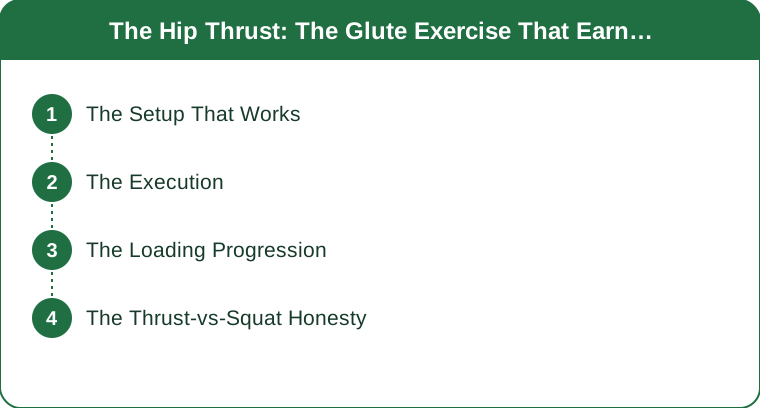
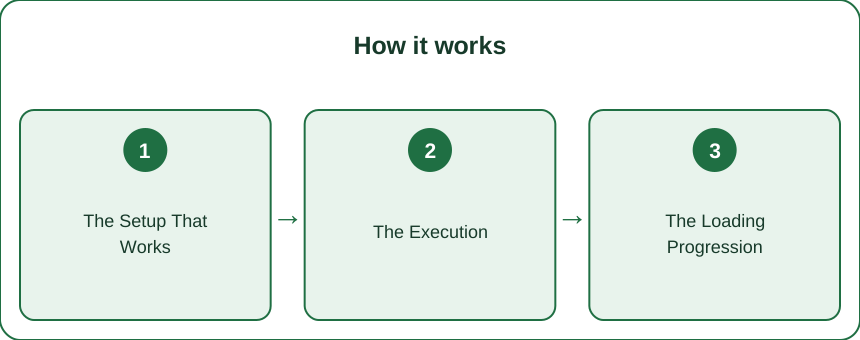
The Setup That Works
Ending the fumbling: the bench geometry (shoulder blades on a bench at roughly knee height — the too-tall bench is most people’s neck complaint; the bench edge hits at the bra-band line), the foot position (feet planted so shins are vertical at the TOP — the shins-forward setup turns it into a quad exercise; the heels-too-close one cramps hamstrings; vertical shins at lockout is the whole calibration), the chin-tuck rule (ribs down, gaze forward — the head thrown back arches what should brace; the ‘eyes on the horizon’ cue fixes the neck complaints), and the pad law (the barbell pad or folded mat on the hips — the hip-bone bruise is the exercise’s only real hazard and it’s entirely optional).
The Execution
The rep that counts: the drive cue (push the floor away through the heels — the glutes extend the hips; the lower-back arch is the counterfeit version), the lockout standard (full hip extension with a deliberate squeeze — the top is the exercise; the partial thrust skips the strongest-angle loading that justifies the lift), the tempo wisdom (controlled down, powerful up, one-second squeeze at top — the bounce-off-the-bottom version trains momentum), and the feel test (glutes burning, hamstrings assisting, lower back quiet — the back that’s working is the setup that’s off; re-tuck the ribs and shorten the range).

The Loading Progression
From floor to loaded: the glute bridge start (floor-based, bodyweight — the pattern learned horizontal; the existing bridge chapters graduate here), the bodyweight bench thrust (the range increase that precedes any load), the dumbbell-and-plate tier (the weight on the hips — the home-gym version that runs months of progress), the barbell graduation (the roll-over-the-legs setup with the pad — the loading ceiling that justifies the hype; the thrust out-loads every other glute exercise eventually), the single-leg variation (the unilateral version that needs no bar — the asymmetry-fixer and the travel version), and the rep-range note (glutes respond across ranges — the heavy 6-8s and the burning 15-20s both build; the program that rotates both wins).
The Thrust-vs-Squat Honesty
The comparison, settled: what the research says (thrusts load glutes harder at full hip extension; squats load them harder at depth — different angles, both effective; the either-or debate was always a both-and answer), the program placement (thrusts as the glute-focused lift, squats as the everything lift — the leg day that includes both covers the full curve), the aesthetics-and-function note (the thrust’s isolation suits glute-specific goals; the squat’s integration suits total strength — the goal picks the emphasis, not the internet), and the beginner’s answer (bridges and squats first — the thrust joins when the bridge gets easy; the hype is earned AND the fundamentals still come first). Vertical shins, ribs down, squeeze the top: the hype, operationalized.
Bench at bra-band height, vertical shins at lockout, ribs down, squeeze the top. The hip thrust earned its hype at full extension — set it up right and the glutes collect.
See It in Motion
Seen here: High Waist Bootcut Yoga Pants with Side Pockets — shop it on bubblelime.com
Keep Reading
This article is for general informational and styling purposes only. Fit, sizing, and product availability may vary.