Desk Job, Sleeping Glutes: The Office Worker's Wake-Up Protocol
Quick Answer: Nine hours of sitting a day teaches your glutes to stop firing — physios call it gluteal amnesia, and your lower back and hamstrings pick up the unpaid overtime. The fix is hourly, not weekly: stand up once an hour and squeeze both glutes hard for 5 seconds × 5 reps, take stairs driving through the heel, and do two minutes of bridges before dinner. No gym required.
Your glutes are the largest and most powerful muscles you own.
They spend roughly nine hours a day functioning as seat cushions.
Muscles treated as furniture eventually behave like furniture — and the bill arrives as a tight lower back, cranky hamstrings, and a squat that never quite feels like it’s coming from the right place.
Here’s the stealth protocol. Most of it is invisible to your colleagues.

What Is Gluteal Amnesia, Really?
It’s a bleak name and a fairly accurate one.
Prolonged sitting does two things at once. It holds the hip flexors in a shortened position for hours, and reciprocal inhibition means a chronically shortened muscle on one side of a joint tends to quiet the muscle on the other side. And it removes the stimulus — your glutes simply aren’t being asked to do anything for the length of a working day.
The result isn’t that the muscle vanishes. It’s that the neural recruitment gets lazy: when you finally do ask for a hip extension, the body reaches for the nearest willing volunteer instead.
Those volunteers are your lower back and hamstrings, and they’re not built for the job. Which is why the most common desk-job complaint is a sore lower back that no amount of stretching fixes — you’re stretching the muscle that’s covering, not waking the one that quit.
The fix starts at the desk, not at the gym. Two gym sessions a week can’t out-vote forty-five hours of sitting.
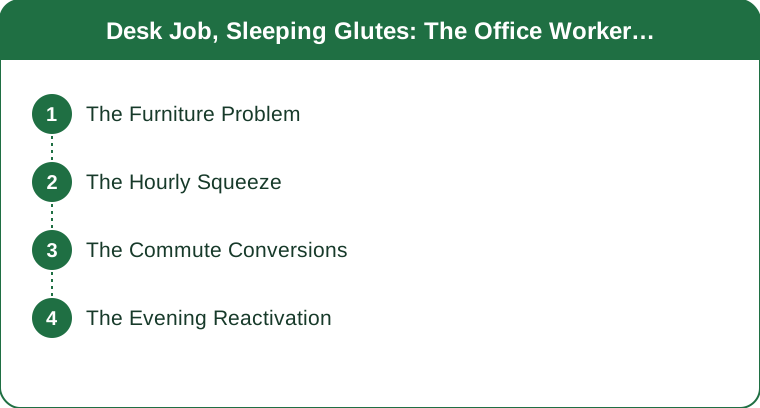
What’s the Hourly Desk Protocol?
Once an hour. It takes 30 seconds and nobody will notice.
Stand up. Squeeze both glutes as hard as you can for 5 seconds. Release. Repeat 5 times.
That’s it. Feel for the squeeze coming from the back of the hip, not the lower back — if your back arches or your ribs flare, you’re recruiting the wrong thing. Keep the ribs down and the tension purely in the glutes.
It looks like you’re standing up to read something. It is faintly ridiculous and genuinely effective, because the point isn’t building strength — it’s keeping the mind-muscle wiring live so the muscle doesn’t get filed under “unused.”
Automate it by attaching it to something you already do: every water refill, every time you stand for a call, or an hourly timer if your calendar is merciless. Habits that ride on existing habits survive; freestanding good intentions don’t.
If you can add one thing: 30 seconds of standing hip extension — stand tall, squeeze one glute and slide that leg straight back a few inches without arching. Ten per side.

How Do You Turn a Commute Into Training?
Three conversions, all free.
Stairs over the elevator, with heel intent. A stair step becomes a glute rep the moment you drive through the heel of the front foot instead of pushing off the toe. Same staircase, different muscle. Ten flights a day adds up to real work by Friday.
The one-leg balance game. On the train or bus, stand on one leg without holding on — or with one finger on the rail. The stabilizing hip does quiet work, and your balance improves as a side effect.
Walk with intent. Most people walk by catching themselves with the quad. Instead, think about pushing the ground behind you. Glutes propel; quads catch. It’s a subtle shift and it changes what a 20-minute walk trains.
None of this requires changing your day. The commute was training all along; it just wasn’t being asked.
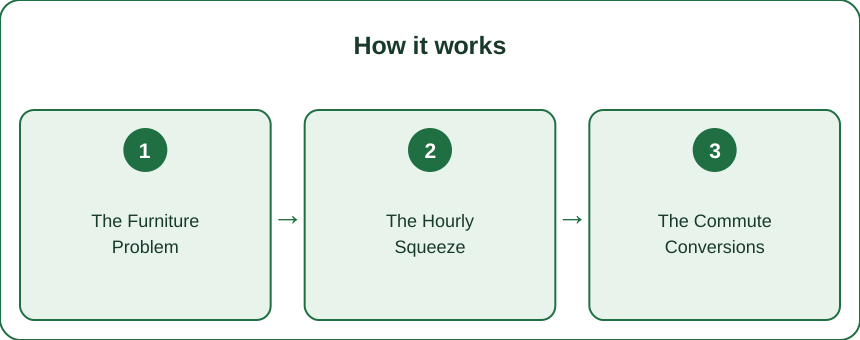
The Two-Minute Evening Reactivation
Before dinner, on the floor. Two minutes.
- Glute bridges × 15. Feet flat, hip-width, heels close to your bum. Drive through the heels, squeeze at the top, hold 2 seconds, lower slowly. Ribs down — this is a hip movement, not a back arch.
- Single-leg bridges × 8 per side. One foot flat, the other leg extended or knee hugged in. This is where you’ll find out which side has been coasting.
That’s the whole thing. The office taught them to sleep for nine hours; two minutes teaches them the day isn’t over.
The compounding benefit: when you get to weekend training, your glutes are already awake, so the squats and deadlifts actually recruit what they’re supposed to recruit instead of quietly loading your lower back again.
Frequently Asked Questions
Can sitting really cause lower back pain through weak glutes?
It’s a well-recognized pattern: when hip extension is under-powered, the lumbar spine and hamstrings compensate, and that compensation produces the classic desk-worker ache. It isn’t the only cause of back pain — far from it — but it’s one of the most common and one of the most fixable. If your back pain is severe, radiates down a leg, or comes with numbness or weakness, see a doctor or physiotherapist rather than treating it with bridges.
Does a standing desk fix the problem?
It helps with the hip-flexor shortening but doesn’t do much for glute recruitment — standing still is also a low-demand position. The best setup alternates: sit, stand, and move every hour. The movement is the active ingredient, not the desk height.
How long until sleeping glutes wake up?
The neural side responds fast — many people notice a difference in how squats and stairs feel within one to two weeks of hourly activations. Actual strength gains need progressive loading over 6–12 weeks. The desk protocol keeps the wiring live; the gym builds the muscle. You need both, but the desk half is the one that’s currently missing.
TL;DR:
- Sitting shortens hip flexors and removes the stimulus — recruitment goes lazy, back and hamstrings compensate.
- Hourly: stand, squeeze both glutes hard, 5 seconds × 5. Attach it to your water refill.
- Take stairs driving through the heel; balance on one leg on the train; push the ground behind you when walking.
- Evening: 15 glute bridges plus 8 single-leg bridges per side. Two minutes.
- Two gym sessions can’t out-vote forty-five hours of sitting — the fix has to be hourly.
- Neural changes show in 1–2 weeks; real strength takes 6–12.
See It in Motion
Seen here: High Waist Yoga Leggings with Inner Pocket — shop it on bubblelime.com
Keep Reading
This article is for general informational and styling purposes only. Fit, sizing, and product availability may vary.