Why Your Glute Training Has Plateaued When Nothing Else Has Changed
Quick Answer: Common causes of a glute training plateau include insufficient progressive overload (weight or reps not actually increasing over time), poor mind-muscle connection leading to other muscles compensating during glute exercises, inadequate protein intake or overall caloric deficit limiting muscle growth capacity, and training the same rep ranges and exercises repeatedly without variation — each cause has a specific, addressable fix that doesn’t require abandoning the current training approach entirely.

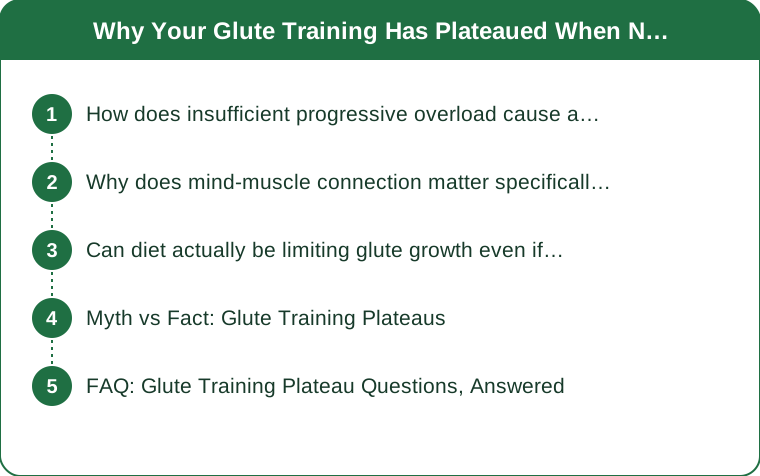
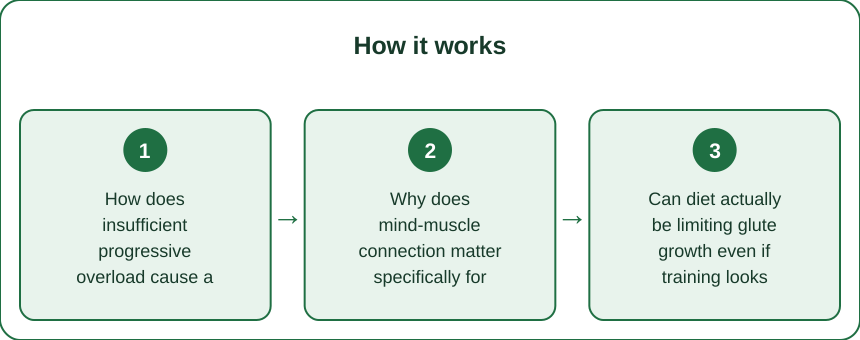
How does insufficient progressive overload cause a plateau even with consistent training?
Muscle growth requires progressively increasing demand over time — more weight, more reps, or more total volume, and simply repeating the same weights and rep ranges week after week, even consistently, provides the muscle no new stimulus to adapt to, which is one of the most common and most fixable plateau causes.
Why does mind-muscle connection matter specifically for glute training?
Many common glute exercises (squats, deadlifts, lunges) also heavily recruit the quadriceps and hamstrings, and without deliberate focus on feeling the glutes work specifically, these other muscle groups can end up doing a disproportionate share of the work, meaning the glutes receive less actual training stimulus than the exercise selection would suggest on paper.

Can diet actually be limiting glute growth even if training looks correct?
Yes — inadequate protein intake or a significant caloric deficit both limit the body’s capacity to build new muscle tissue, regardless of how well-structured the training program is. A plateau that coincides with a period of dieting or reduced food intake is worth examining from this angle as much as from a training-program angle.
Myth vs Fact: Glute Training Plateaus
Myth: a plateau means you’ve hit your genetic ceiling for glute development. Fact: most plateaus trace back to a specific, fixable training or nutrition variable rather than a genuine genetic limit, and genuine ceilings are far less common than assumed. Myth: doing more glute exercises automatically breaks a plateau. Fact: adding volume without addressing progressive overload, mind-muscle connection, or nutrition often just adds more of the same ineffective stimulus rather than solving the actual underlying cause.
FAQ: Glute Training Plateau Questions, Answered
How often should weight or reps actually be increased to avoid a plateau?
Aiming for small, incremental increases every 1-2 weeks, even if modest, tends to be more sustainable and effective than large infrequent jumps, and provides more consistent progressive overload over time.
Does changing exercise selection entirely help break a plateau?
Sometimes, particularly if the same exact exercises have been used for many months, since some variation in movement pattern can recruit muscle fibers slightly differently — but this works best combined with, not instead of, addressing progressive overload directly.
Is it possible to fix mind-muscle connection issues without a trainer?
Yes, for many people — slowing down the eccentric (lowering) portion of an exercise, briefly pausing at peak contraction, and consciously focusing attention on the glutes during the movement can meaningfully improve mind-muscle connection without professional guidance, though a session or two with a trainer can accelerate this.
TL;DR:
- Most glute plateaus trace back to insufficient progressive overload, not a genetic ceiling
- Poor mind-muscle connection lets other muscles compensate during glute-focused exercises
- Inadequate protein or a caloric deficit can limit growth even with well-structured training
- Small, incremental weight or rep increases every 1-2 weeks sustain progress better than infrequent jumps
A glute plateau almost always has a specific, fixable cause — identifying which one applies is more productive than just adding more volume.
See It in Motion
Seen here: Bootcut Yoga Pants with Side Pockets — shop it on bubblelime.com
Keep Reading
This article is for general informational and styling purposes only. Fit, sizing, and product availability may vary.