Why Glute Growth Stalls Around the Six-Month Mark (and What to Change)
Quick Answer: Around the six-month mark, most lifters have adapted to a fairly narrow set of glute exercises and rep ranges, and the muscle simply stops responding to the same stimulus. Changing exercise variation, rep range, or training frequency — not just adding weight — usually restarts progress.
Your first few months of glute training probably felt great — visible progress, steady strength gains. Then around month six, the same program that used to work stopped moving the needle at all. This is one of the most common and predictable plateaus in strength training.

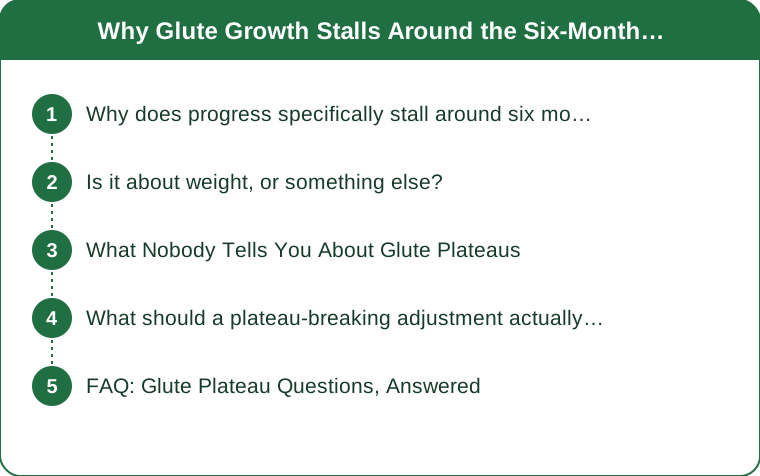
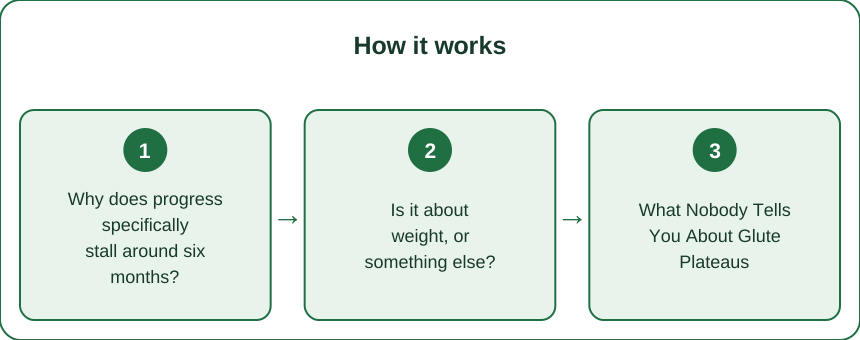
Why does progress specifically stall around six months?
Early strength gains come partly from neuromuscular adaptation — your nervous system getting better at recruiting the muscle — which happens fast in the first few months regardless of the exact program. Once that adaptation maxes out, further progress depends entirely on genuine mechanical and metabolic stress, which a repeated, unchanged program stops providing.
Your glutes, like any muscle, adapt to a specific stimulus over time — the same exercises, same rep ranges, and same angles eventually stop being enough of a novel challenge to drive further growth.
Is it about weight, or something else?
Weight matters, but exercise variation matters just as much for glutes specifically, because the muscle has three distinct heads (max, medius, minimus) that respond differently to hip extension, hip abduction, and rotational movements.
A program built mostly around hip thrusts and squats — both primarily hip-extension movements — can plateau even with increasing weight, because the glute medius and minimus aren’t getting proportional stimulus from lateral or rotational work.

What Nobody Tells You About Glute Plateaus
Most plateau advice says ‘just add weight,’ but for glutes specifically, changing the angle of hip extension — like swapping barbell hip thrusts for single-leg variations, or flat-ground work for deficit or elevated positions — often breaks through a stall faster than adding load to the same movement.
Training frequency is also underrated: many six-month plateaus come from training glutes directly only once a week. Adding a second, lighter session focused on activation and volume (not maximal weight) can restart progress without overtraining risk.
What should a plateau-breaking adjustment actually look like?
Rotate in 1-2 new exercises targeting glute medius specifically (banded lateral walks, single-leg hip thrusts, cable kickbacks) alongside your existing primary lifts, and shift rep ranges — if you’ve been training in the 8-12 range for six months, try a 4-6 week block of 15-20 rep, higher-volume work.
A deload week (reduced volume and intensity for 5-7 days) before restarting with these changes also helps, since accumulated fatigue can mask progress even when the underlying adaptation is ready to resume.
FAQ: Glute Plateau Questions, Answered
How do I know if it’s a real plateau or just a bad week?
A true plateau is a lack of progress over 3-4 consecutive weeks despite consistent training and recovery — a single off week is usually just normal fluctuation.
Should I increase training frequency or intensity first to break a plateau?
Try variation and rep-range changes first — increasing frequency without changing stimulus often just adds fatigue without solving the underlying adaptation issue.
Is six months a universal plateau point for everyone?
No — it’s a common range but varies by starting fitness level, consistency, and genetics. Some people plateau at 3-4 months, others closer to a year.
TL;DR:
- Six-month glute plateaus usually come from the nervous system maxing out its adaptation to an unchanged program
- Exercise variation targeting all three glute muscles matters as much as adding weight
- A second, lighter weekly glute session can restart progress without overtraining
- A short deload before changing the program helps clear accumulated fatigue that masks readiness to progress
If hip thrusts stopped working, the answer usually isn’t more weight — it’s a genuinely different angle of attack.
See It in Motion
Seen here: Super High Waist Embossed Yoga Leggings with Inner Pocket — shop it on bubblelime.com
Keep Reading
This article is for general informational and styling purposes only. Fit, sizing, and product availability may vary.