5 Glute Training Mistakes That Stall Your Progress
Quick Answer: Most stalled glute progress comes down to five fixable mistakes: skipping activation, relying only on squats, never adding resistance, rushing reps, and losing the mind-muscle connection. Fix them by doing 2 minutes of activation first, prioritizing hip thrusts over squats, adding load every 2–3 weeks, and controlling a 2-second lowering phase on every rep.
You’re doing the squats. You’re doing the lunges. And your glutes remain entirely unimpressed.
Before you blame genetics: stalled glute progress is almost always a targeting problem, not an effort problem. Here are the five culprits, and the fifth one is where most people who’ve been training for a year are actually stuck.

Why Isn’t Squatting More Growing My Glutes?
Because squats are a quad-dominant movement, and the glutes are only heavily loaded through part of the range.
Here’s the mechanical reason. Glute activation in a squat peaks near the bottom, in deep hip flexion, and drops off substantially as you approach lockout. A hip thrust does the opposite — peak glute tension lands at the top, in full hip extension, which is where the glutes are strongest and where you can load them hardest.
That’s why hip thrust variations consistently show high gluteus maximus activation and why people who add them tend to notice a change within a couple of months of squat-only training.
Effort isn’t the issue. Targeting is. Fixing these five things means the work you’re already doing actually lands where you want it.
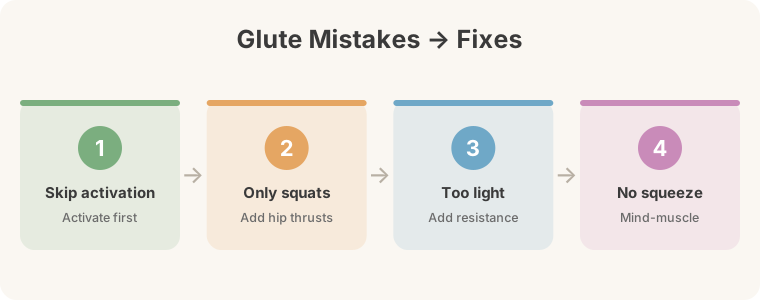
The 5 Glute Training Mistakes
1. Skipping glute activation
If your glutes aren’t firing before you load them, your quads, hamstrings, and lower back will happily take over the movement. This is especially common if you sit for most of the day, since prolonged hip flexion leaves the glutes sluggish to recruit.
Fix: 2 minutes before your session — 15 glute bridges, 15 banded lateral walks per side, 10 fire hydrants per side. Not a workout, a wake-up call. You should feel the target working before you touch a barbell.
2. Only doing squats
Covered above. Squats are excellent and not sufficient on their own.
Fix: Build the session around hip-extension work. Hip thrusts, Romanian deadlifts, glute bridges, cable kickbacks, reverse hyperextensions. A reasonable structure is one heavy hip-extension movement, one squat pattern, and one abduction movement per session.
3. Not using enough resistance
Bodyweight bridges will build something for a few weeks and then plateau, because the glutes are the largest muscle in the body and they respond to load.
Fix: Progressive overload. Add 5–10 lb to your hip thrust every 2–3 weeks, or add reps until you’re at the top of your range and then add weight and reset. If you can do 20 bodyweight bridges comfortably, that exercise stopped being a stimulus a while ago.
4. Rushing the reps
Fast, bouncy reps use momentum and elastic recoil, which means the muscle does less of the work. Rushing also shortens time under tension, which is a meaningful driver of growth.
Fix: 2 seconds down, 1 second pause at full hip extension, controlled up. On a hip thrust, that pause at the top with a hard squeeze is where the exercise actually happens. Twelve controlled reps beat twenty bounced ones.
5. Neglecting the mind-muscle connection
This is the one that surprises even experienced lifters. If you can’t feel your glutes working during a set, they’re likely contributing less than you think — other muscles are quietly compensating.
Fix: Deliberately squeeze the glutes through the full rep, especially at lockout. Drop the weight 20% if you need to in order to feel it. Touching the muscle you’re trying to work — hand on the glute during a bridge — is a low-tech cue that genuinely helps recruitment.

What Actually Ties It Together?
Progressive overload plus frequency. Two glute-focused sessions a week, 48 hours apart, with load or reps creeping up over time. That’s the whole program.
Volume guidance for most people lands around 10–20 hard sets per week for a muscle group you’re prioritizing. If you’re doing three sets of squats on leg day and calling it glute training, you’re at the very bottom of that range with a movement that isn’t glute-dominant to begin with.
Give it 8–12 weeks with progression logged. Glutes respond well, but they respond to load and consistency, not to variety and enthusiasm.
FAQ
How long does it take to see glute growth?
With consistent progressive training twice a week, most people notice strength changes within 4–6 weeks and visible changes around 8–12 weeks. Visible change is slower than strength change because it depends on both muscle gain and body composition — which is why measuring your hip circumference monthly is more informative than checking the mirror daily.
Should I train glutes every day?
No. Like any muscle, glutes need recovery to adapt — 2–3 focused sessions a week with at least 48 hours between hard sessions is the productive range. Daily activation work (bridges, banded walks) is fine because it’s low-load, but daily heavy hip thrusts will accumulate fatigue faster than adaptation.
Do I need weights to grow my glutes?
Eventually, yes — or at least meaningful external resistance. Bodyweight work builds a base for the first few weeks, but progression stalls quickly. Resistance bands, a loaded backpack, single-leg variations, or dumbbells all extend that runway considerably before you’d need a barbell.
General fitness information, not medical advice. If you have lower back or hip pain, get form checked by a qualified trainer or physical therapist before loading heavily.
TL;DR:
- Squats are quad-dominant with peak glute demand at the bottom; hip thrusts load the glutes at full extension
- Activate first: 2 minutes of bridges and banded walks so the glutes lead instead of compensating
- Add load every 2–3 weeks — bodyweight-only stalls fast on the body’s largest muscle
- Slow the tempo: 2 seconds down, 1-second squeeze at the top, controlled up
- Train glutes 2–3× weekly, 10–20 hard sets total, and give it 8–12 weeks of logged progression
See It in Motion
Seen here: High Waist 8” Yoga Shorts — shop similar styles on bubblelime.com
Keep Reading
This article is for general informational and styling purposes only. Fit, sizing, and product availability may vary.