How Often Should You Actually Train Glutes for Real Growth?
Quick Answer: Most research supports training glutes with direct, challenging work 2-3 times per week, with at least 48 hours between sessions targeting the same muscle group — daily glute-focused training without adequate recovery tends to slow progress rather than speed it, since muscle growth happens during recovery, not during the workout itself.
Daily glute workouts feel like the dedicated approach, but muscle tissue actually rebuilds and grows in the recovery window between sessions — training the same muscle group every single day without rest can work against the goal.

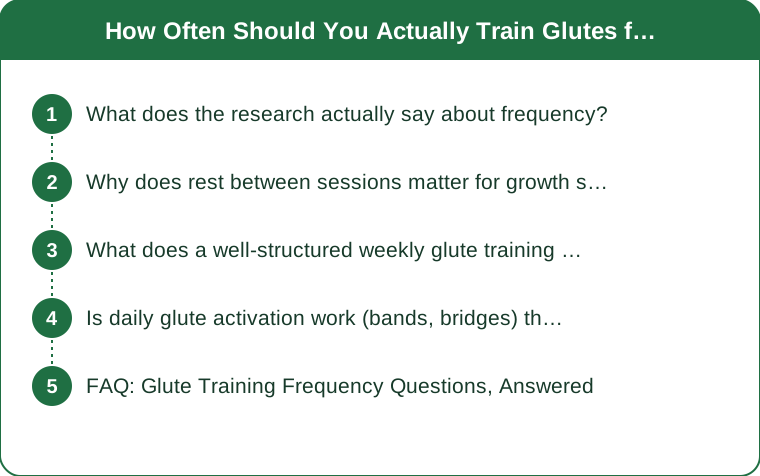
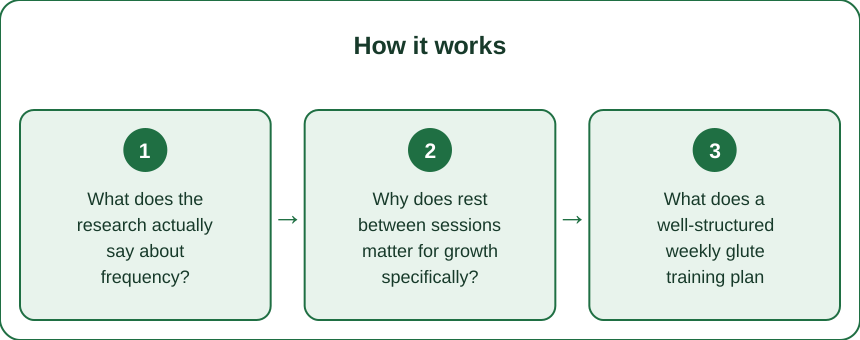
What does the research actually say about frequency?
Studies on resistance training frequency generally show 2-3 sessions per week per muscle group produces comparable or better results than daily training, as long as each session includes enough volume (sets and challenging weight) to stimulate growth.
The key variable isn’t just frequency alone — it’s total weekly volume and intensity. Three well-executed, challenging sessions a week generally outperform seven light, under-challenging daily sessions for actual muscle growth.
Why does rest between sessions matter for growth specifically?
Muscle fibers experience microscopic damage during resistance training, and the actual growth (muscle protein synthesis) happens during the 24-48 hour recovery window afterward, fueled by adequate protein intake and sleep — not during the workout itself.
Training the same muscle again before that repair process completes can interrupt growth rather than accelerate it, which is why professional strength programs build in rest days between sessions targeting the same muscle group rather than daily isolated work.

What does a well-structured weekly glute training plan look like?
A common effective structure: one heavier, lower-rep session (squats, deadlifts, heavy hip thrusts), one moderate-rep session (lunges, step-ups, cable work), and optionally one lighter activation-focused session (banded work, glute bridges) spread across the week with at least a day of rest between the two harder sessions.
This structure hits the muscle group with enough total volume for growth while respecting the recovery window that actually produces the results people are training for.
Is daily glute activation work (bands, bridges) the same as training frequency concerns?
Not exactly — very light activation work (a few minutes of banded walks or glute bridges, well below fatigue) doesn’t create the same muscle damage that heavier training does, so doing it daily alongside 2-3 harder sessions a week is generally fine and doesn’t violate the recovery principle.
The recovery concern applies specifically to challenging, near-fatigue training — not to light daily mobility or activation work, which serves a different purpose (mind-muscle connection, circulation) than growth-focused training.
FAQ: Glute Training Frequency Questions, Answered
Can you train glutes every day if you keep the intensity low?
Light activation work daily is fine, but daily heavy or near-failure training on the same muscle group typically works against growth by not allowing recovery.
How do you know if you’re not giving enough recovery time?
Persistent soreness beyond 72 hours, declining performance in subsequent sessions, and plateauing results despite consistent training are common signs of inadequate recovery.
Does training frequency need to change as you get more advanced?
More experienced lifters sometimes benefit from higher frequency because they recover faster and tolerate more volume, but that’s an individual progression, not a starting-point recommendation.
TL;DR:
- 2-3 challenging sessions per week per muscle group generally outperforms daily training for growth
- Actual muscle growth happens during the 24-48 hour recovery window, not during the workout
- A mixed structure (one heavy, one moderate, optional light activation) covers volume while respecting recovery
- Light daily activation work is fine — the recovery principle applies to challenging, near-fatigue training specifically
More frequent isn’t automatically better — the recovery window is doing real work too.
See It in Motion
Seen here: High Waist Yoga Leggings with Side Pockets — shop it on bubblelime.com
Keep Reading
This article is for general informational and styling purposes only. Fit, sizing, and product availability may vary.