Why Runners Need Dedicated Glute Training (Not Just More Running)
Quick Answer: Running alone doesn’t fully load the glutes through their strongest ranges, especially glute medius for hip stability. Adding 2 dedicated glute sessions a week — bridges, single-leg work, lateral band exercises — improves running economy and reduces common injuries like IT band syndrome and runner’s knee.
You run several times a week and assume that’s plenty of glute work — after all, you’re using your legs constantly. But running is a fairly narrow, repetitive movement pattern, and it doesn’t load the glutes the way dedicated strength work does.

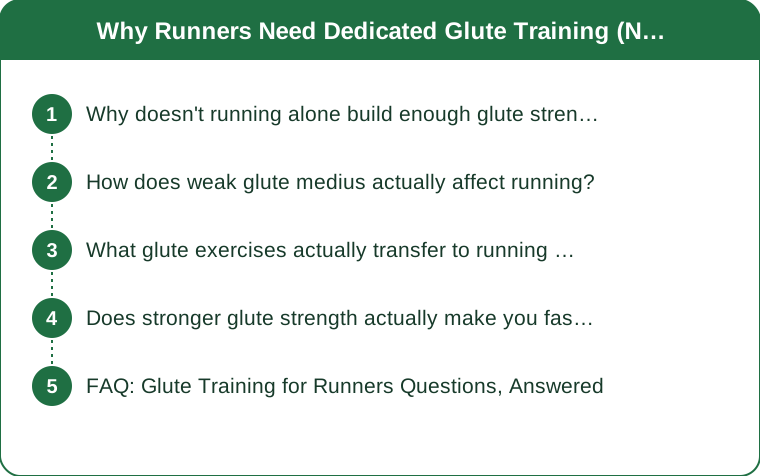
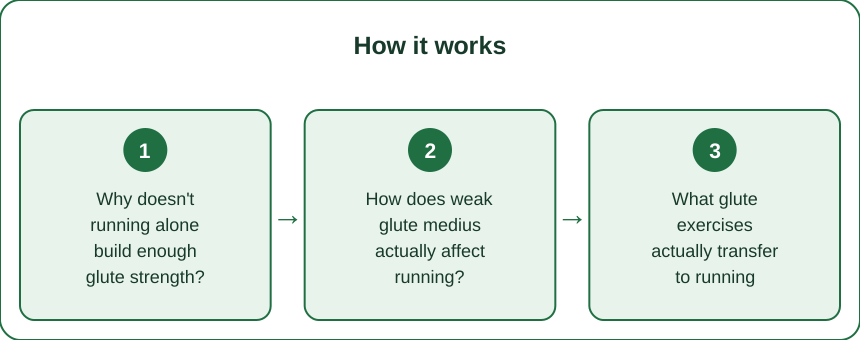
Why doesn’t running alone build enough glute strength?
Running is primarily a forward, sagittal-plane movement — it doesn’t demand much lateral or rotational hip stability, which is exactly where glute medius (the smaller, stabilizing glute muscle) does its most important work. Without dedicated lateral and single-leg training, that muscle stays relatively underdeveloped no matter how many miles you log.
How does weak glute medius actually affect running?
A weak glute medius allows the hip to drop or wobble slightly with each stride (visible as ‘hip drop’ on video analysis), which increases stress on the IT band and knee alignment over thousands of repetitive strides in a single run. This is one of the most common underlying causes behind IT band syndrome and patellofemoral (runner’s knee) pain.

What glute exercises actually transfer to running performance?
Single-leg glute bridges, lateral band walks, and single-leg deadlifts most directly mirror the single-leg loading pattern of a running stride, making them more transferable than bilateral exercises like a standard barbell hip thrust alone (though that’s still valuable for overall strength).
2 sessions a week of 3-4 such exercises, done consistently for 6-8 weeks, is enough to produce a measurable change in hip stability and often a corresponding drop in nagging knee or IT band discomfort.
Does stronger glute strength actually make you faster, or just prevent injury?
Both. Stronger glutes improve hip extension power, which directly contributes to stride push-off force — several studies link glute strength improvements to better running economy (using less energy at the same pace), not just injury reduction.
FAQ: Glute Training for Runners Questions, Answered
How soon before a race should I start glute training?
Start glute-specific work at least 6-8 weeks out, not during race-week taper — new strength stimulus close to a race can cause unwanted fatigue rather than benefit.
Will glute training make my legs feel heavy during runs?
Some initial soreness in the first 1-2 weeks is normal as your body adapts, but properly dosed glute work (2x weekly, not daily) shouldn’t create lasting heaviness once you’re past the adaptation period.
Do I need a gym for effective glute training as a runner?
No — bodyweight glute bridges, band walks, and single-leg exercises done at home cover most of what’s needed; a resistance band is the only inexpensive equipment worth adding.
TL;DR:
- Running’s forward-only movement pattern underdevelops glute medius specifically
- Weak glute medius causes hip drop, linked to IT band syndrome and runner’s knee
- Single-leg bridges, lateral band walks, and single-leg deadlifts transfer best to running
- Glute strength improves both injury resistance and running economy
Two dedicated sessions a week is a realistic addition to most running schedules, and the payoff shows up in fewer nagging injuries within a couple months.
See It in Motion
Seen here: High Waist Bootcut Yoga Pants — shop it on bubblelime.com
Keep Reading
This article is for general informational and styling purposes only. Fit, sizing, and product availability may vary.