The Glute Training Mistake That's Actually Causing Your Lower Back Pain (Not Fixing It)
Quick Answer: Glute exercises like hip thrusts and bridges are commonly recommended for back pain because weak glutes force the lower back to compensate during daily movement, but overextending the lower back at the top of these exercises (rather than driving through the glutes) shifts the load right back onto the spine, undermining the exercise’s purpose. Focusing on a controlled, non-hyperextended top position is the key form fix.

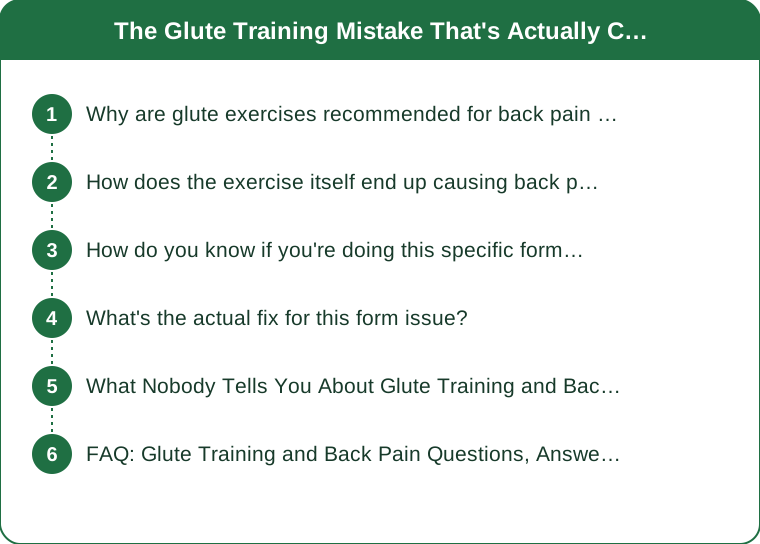
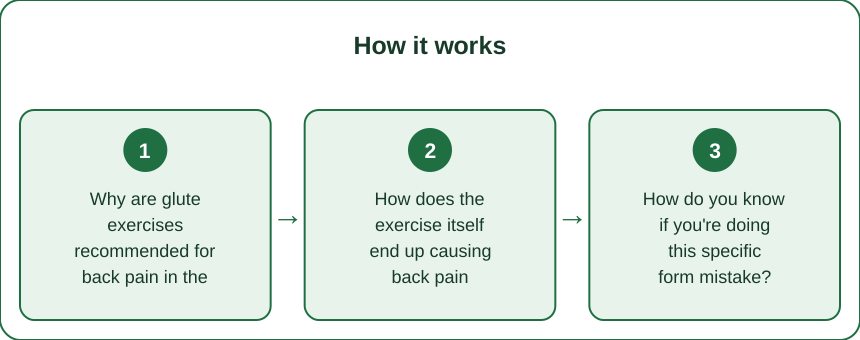
Why are glute exercises recommended for back pain in the first place?
Weak or underactive glutes often force the lower back and hip flexors to compensate during everyday movements like standing up or walking, creating chronic overuse strain on the lower back — strengthening the glutes is meant to take that load off the spine and redistribute it to where it belongs.
How does the exercise itself end up causing back pain instead?
A common form mistake is hyperextending (arching) the lower back at the top of a hip thrust or bridge rather than stopping at a neutral, glute-driven position — this shifts the load from the glutes back onto the lumbar spine at exactly the top of the movement, which can create the same compensation pattern the exercise was meant to fix.
How do you know if you’re doing this specific form mistake?
A noticeable arch in the lower back at the top of the movement, or feeling the exercise more in your lower back than your glutes, are both signs of this pattern — a properly executed hip thrust should end with the ribcage and pelvis roughly aligned, not with the lower back curved beyond neutral.

What’s the actual fix for this form issue?
Consciously stopping the movement at the point where the glutes are fully engaged and the pelvis is level, rather than pushing further into a back arch for a bigger-looking range of motion, is the main correction — a slight posterior pelvic tilt cue (tucking the tailbone slightly under at the top) helps many people find this position.
What Nobody Tells You About Glute Training and Back Pain
A weight that’s too heavy for current glute strength often causes this compensation pattern to appear, since the lower back takes over once the glutes reach their capacity — reducing the load and rebuilding the movement pattern correctly at a lighter weight often resolves the issue faster than continuing to push through heavier weight with poor form.
Core bracing (a light abdominal engagement) throughout the movement helps stabilize the spine and reduces the tendency to compensate with a back arch, which is a commonly missed cue in generic glute-training guidance that focuses only on the hip movement itself.
Persistent lower back pain during or after glute training is a signal to have form checked by a professional, rather than assuming more reps or more weight will eventually resolve it — a trainer or physical therapist can spot the specific compensation pattern faster than self-assessment usually can.
FAQ: Glute Training and Back Pain Questions, Answered
How do I know if my back pain is from form or a separate underlying issue?
Pain that specifically correlates with certain exercises and improves with a form correction is more likely technique-related; pain that persists regardless of exercise or worsens over time is worth having assessed by a professional.
Should I stop glute training entirely if I notice back pain during it?
Not necessarily — reducing weight and focusing on form correction first is usually the better first step than stopping the exercise category altogether, assuming the pain isn’t severe or acute.
Are certain glute exercises more prone to this mistake than others?
Hip thrusts and glute bridges are the most commonly cited, since their movement pattern makes lower-back compensation easy to fall into without a specific top-position cue. This is general information, not medical advice.
TL;DR:
- Weak glutes often cause the lower back to compensate, which is why glute training is recommended for back pain
- Hyperextending the lower back at the top of a hip thrust shifts load right back onto the spine
- Stopping at a neutral, glute-driven top position (not a bigger back arch) is the key form fix
- Reducing weight to rebuild the correct pattern often resolves the issue faster than pushing through heavier loads
The exercise category is right for back pain — it’s the specific top-of-movement form that decides whether it actually helps or quietly makes things worse.
See It in Motion
Seen here: High Waist Printed Bootcut Yoga Pants with Pockets — shop it on bubblelime.com
Keep Reading
This article is for general informational and styling purposes only. Fit, sizing, and product availability may vary.